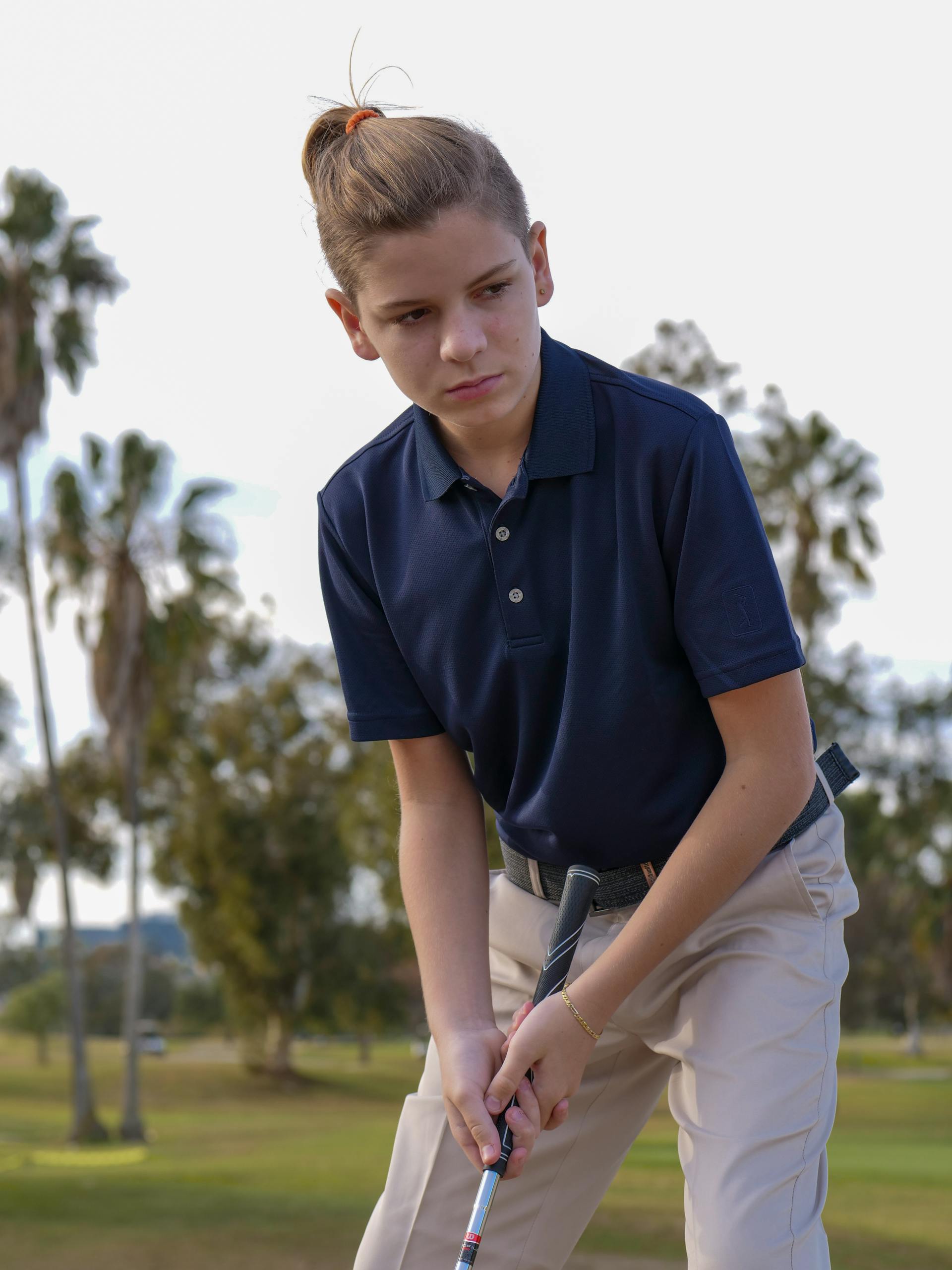
How to Practice with Your Junior Golfer
5 min read
The Problem with Junior Practice
Here's what most parents do wrong: they take their child to the range, hand them a bucket of balls, and say "practice." The kid hits a few shots, gets frustrated, starts goofing off, and the parent considers the session a failure.
Here's what actually works: make every practice session a game.
PGA junior instructors almost universally agree — structured games beat repetitive drilling for young players. Kids learn through play. When practice feels like play, improvement follows naturally.
The Golden Rules of Junior Practice
1. Keep Sessions Short
Young children (under 10): 30–45 minutes maximum
Older juniors (10–14): 45–75 minutes
Teens: Up to 90 minutes if engagement is high
Quality beats quantity every time. One focused 30-minute session beats a miserable 2-hour grind session. When energy drops, end on a positive note — not when they're frustrated.
2. End on Success
Always — always — end a practice session with something your child can do well. If they've been struggling with driver, end with a few easy chips they can make. Leave practice with a good feeling and they'll want to come back.
3. Never Fix More Than One Thing at a Time
It's tempting to correct everything you see in one session. Resist. Pick one thing, focus on it, and leave everything else alone. Young golfers can only process one change at a time. More than that creates confusion and frustration.
4. Praise Effort, Not Results
"I love how you kept your head down on that one" beats "Great shot!" The process-focused compliment teaches them what to replicate. The outcome-focused one teaches them to focus on results — which they can't fully control.
5 Practice Games Junior Golfers Love
Game 1: The 9-Point Challenge
Set up 9 targets at the range — towels, cones, or spots on the grass. Award 1 point for hitting within 10 yards, 2 points within 5 yards, 3 points for a direct hit. Play three rounds through the 9 targets and try to beat your personal best.
What it teaches: Target focus, course management mindset, consistency under pressure.
Game 2: Par 18
Choose 6 spots around a putting green. Each spot is a "hole" with par 3 (2 putts + 1 chip-in or 3 putts). Play all 6 spots for a total par of 18. Try to break par.
What it teaches: Chipping technique, putting distance control, patience.
Game 3: The Landing Zone
Instead of focusing on distance, pick landing zones for approach shots. Draw or mark a circle on the turf (or use an existing target). Score points for balls that land in or near the zone — not for how far they go.
What it teaches: Launch angle, control, approach shot strategy.
Game 4: Speed Golf
On a short par 3 or par 4 practice hole, play as fast as possible while still trying to score well. The constraint of "playing fast" eliminates overthinking and promotes athletic, instinctive swings.
What it teaches: Trust, rhythm, not overthinking.
Game 5: Mirror Match
Play a 9-hole round where your child has to copy your shot selection — same club, same target. When they have to make a decision for you, they start thinking like a course manager, not just a ball striker.
What it teaches: Strategic thinking, decision-making, club selection.
When to Bring in a Pro
If your child is playing more than once a week, a PGA junior instructor is worth the investment. Look for:
One lesson per month with at-home practice games is often more effective (and affordable) than weekly lessons.
A Sample 45-Minute Practice Session
| Time | Activity |
|---|---|
| 0–10 min | Short game warm-up (putting, chipping) |
| 10–25 min | Main skill focus (one specific thing) |
| 25–35 min | Game format (9-Point Challenge, etc.) |
| 35–42 min | On-course simulation (real decision-making) |
| 42–45 min | End on success — something they're good at |
The Most Important Thing
Your energy sets the tone. If you're relaxed, patient, and having fun — they will be too. If you're tense, critical, or obsessing over scores, they'll feel it.
The goal at every junior practice session isn't to build a tour player. It's to build a kid who loves golf and wants to come back. Everything else follows from that.
Ready to Find the Right Clubs?
Get a personalized recommendation in under 2 minutes — free.
Get Fitted Free →